
ICE Transfers from Hodgeman Jail
The research found no verified permanent ICE detention facility or ICE detention contract in Hodgeman County. Immigration custody can still become relevant when the sheriff releases a person to ICE or another federal transport route. That transaction ends Hodgeman County custody at a recorded time, yet it may begin or continue federal civil immigration detention.
The local record and federal record should be kept as two events. First, ask the Hodgeman County Sheriff whether the person physically left the jail, how the transaction was coded, and whether a receiving custodian is public. Second, check ICE for the later custody status. A phrase such as “ICE hold,” “released to ICE,” or “federal transport” does not mean the person entered the community.
| Event | Correct reading | Source |
|---|---|---|
| County release to ICE | Hodgeman custody ended through transfer | Sheriff release transaction |
| ICE locator match | Current immigration detention information is displayed | ICE Online Detainee Locator |
| No locator match | Custody is unresolved until timing and identity issues are checked | ICE locator and ERO inquiry |
| ICE release | Immigration detention ended under the confirmed event | ICE or ERO record, plus case information as needed |
ICE Detainee Custody Lookup
The ICE Online Detainee Locator searches current immigration detention. Its two routes require different identity data. An A-number search uses the person’s alien registration number and country of birth. The biographical route uses the name, birth information, and country of birth requested by the live interface. Exact entry matters, and a recent transfer may not appear at once.
- Gather the full legal name, country of birth, date of birth, and A-number if available. Preserve leading zeroes required by the live form.
- Use the A-number route when the number is reliable. Otherwise use the biographical fields exactly as ICE requests them.
- Compare the result with more than a name. Record the custody information and the time the search was checked.
- If there is no match, retry reasonable name forms and allow for a recent transfer or data update.
- Contact the relevant Enforcement and Removal Operations office or detention-information route when the locator does not resolve the person’s status.
The locator is for immigration detention, not Hodgeman County bookings, Kansas prison custody, or federal criminal prison records. Kansas VINE covers county jails. KASPER covers current and former KDOC offenders. The BOP locator covers federal prison records. Select the source by custodian.
ICE Detention Contact and Release
ICE’s official detention management information provides the current agency context and contact routes used when the locator alone is not enough. The successful research capture shows the federal source used for that facility pathway:
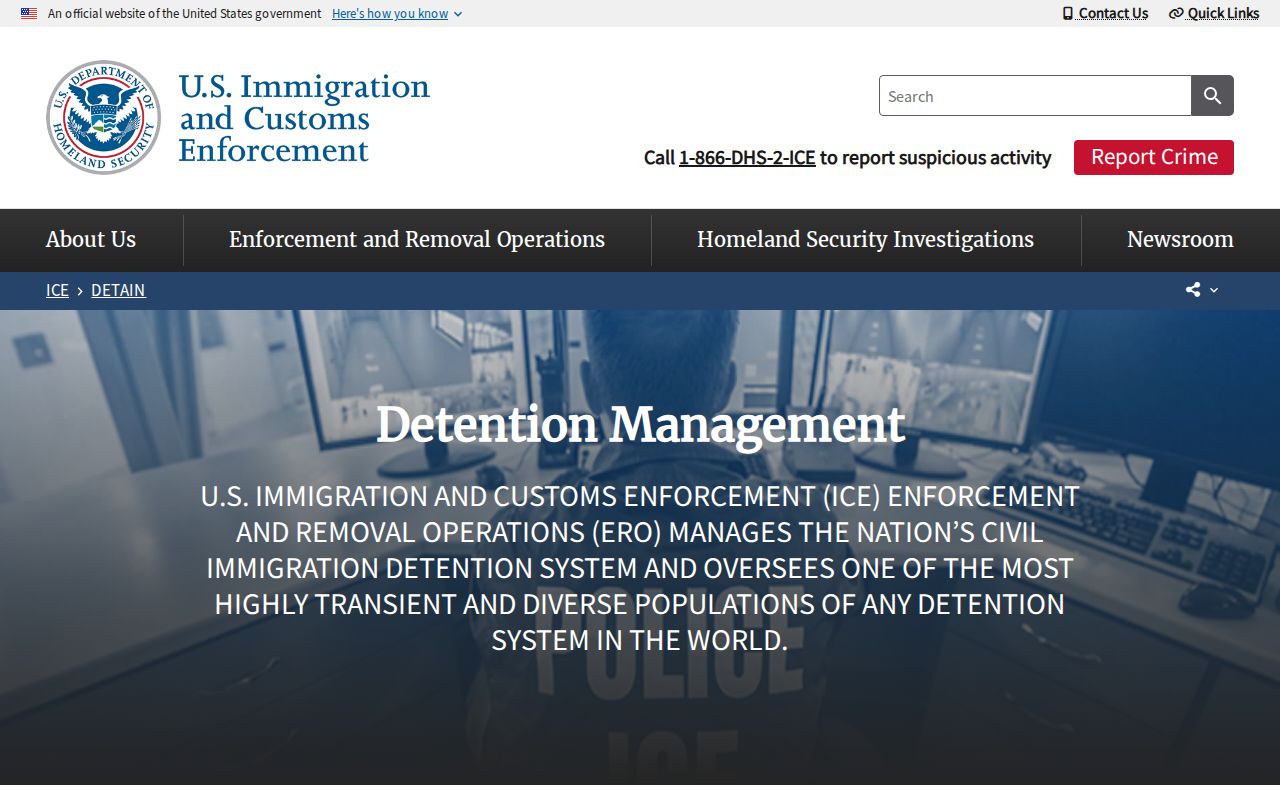
The source belongs to the national ICE detention system. It does not establish a local Hodgeman facility or contract, and no such local arrangement should be inferred from a general federal page.
ICE Detention System
National civil immigration custody system
Public route: Online Detainee Locator
No standing ICE facility or county contract verified in Hodgeman County
Use the relevant ERO office for unresolved status
A precise inquiry should provide the full legal name, A-number if known, country of birth, date of birth, the date and location of the county handoff, and the question being asked. Ask whether the person is currently detained, transferred, or released, and how to obtain the appropriate existing record. Access to case-specific information can be limited.
Hodgeman ICE Transfer Record
The Hodgeman County Sheriff’s Office is the source for the local half of a transfer. The official county directory associates it with 500 Main Street in Jetmore and lists 620-357-8391. Ask for the physical exit time, release code or authority, and receiving custodian when public. If oral confirmation is incomplete, request the existing booking/release transaction under the Kansas Open Records Act.
The local request should include the person’s full name, birth date, approximate booking date, and booking or case number if known. A narrow request is more useful than asking the sheriff to compile a new immigration report. Current Hodgeman copy and search fees were not published. Ask for an estimate and set an advance authorization limit.
The district-court record may explain a bond, dismissal, sentence, commitment, or other criminal-case authority. It does not decide an immigration case. Likewise, the sheriff should not be asked to interpret federal immigration status. The Hodgeman County release-record search shows how to preserve each agency’s event without merging their roles.
What an ICE Release Means
Immigration detention is civil federal custody. Its release does not itself resolve every criminal case, state sentence, federal criminal sentence, or court supervision term. A person may also move between ICE facilities, into another custodian’s control, or into the community under immigration conditions. The specific event and destination matter more than a loose use of the word “released.”
- ICE detainer
- A request or notice connected to immigration custody that may affect a local release.
- Custodial transfer
- A direct handoff from one authority to another.
- ERO
- Enforcement and Removal Operations, the ICE component used for detention and field-office routing.
- A-number
- An immigration identification number used in the locator when available.
Keep the county release timestamp, ICE admission or locator check, any later transfer, and the actual ICE release as distinct entries. If a person also has a federal criminal case, use the federal docket for that case and the BOP locator only when BOP prison custody applies.
Immigration proceedings can continue after detention ends. A release from an ICE facility does not by itself close an immigration case, cancel a hearing, or end every reporting duty. Current case instructions come from the responsible federal immigration authorities and filed case material, not from the county sheriff. In the other direction, an immigration custody result does not resolve a Hodgeman criminal charge. Check the Kansas district-court records route for that separate case and preserve each agency’s dates under its own heading.
When ICE Release Is Unclear
A failed search should trigger a measured fallback. Recheck the spelling and birth data. Confirm the A-number format and country of birth. Ask the sheriff whether the destination was truly ICE rather than USMS, BOP, KDOC, or another jail. Then use the relevant ERO information channel with the local handoff date.
Data may lag after a recent transfer. Another lawful custodian may hold the person. The person may also fall outside what the public locator displays. Do not use a lack of results to announce community release. A direct agency response or existing custody record is stronger than an inference from silence.
Note: No verified Hodgeman County ICE facility or contract was found as of July 18, 2026, so recheck official local and federal sources if arrangements change.
Hodgeman Federal Custody Fork
The local decision path is simple when each agency keeps its own role: Hodgeman jail release goes first to the sheriff record; county-jail alerts go to Kansas VINE; a state commitment goes to KASPER; a sentenced federal prisoner goes to BOP; current immigration detention goes to ICE. A federal pretrial question may instead belong to USMS and the federal court.
This custody fork guards against the most serious local error. Release from one agency is not release from all agencies. Document the ending event, check the receiving system, and confirm final community release only when the sources support it.